Interview by Nelson (Mr Luxury)
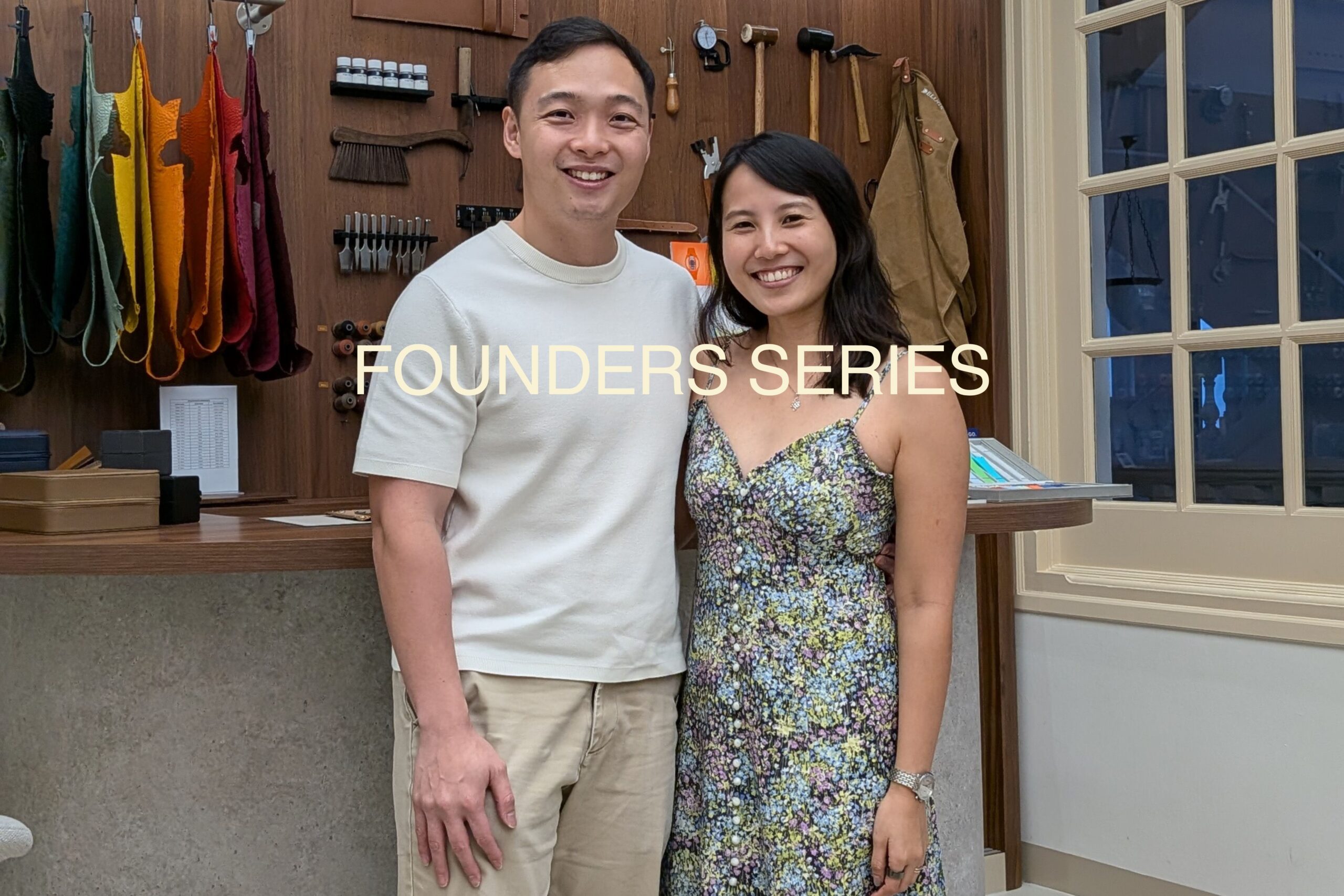
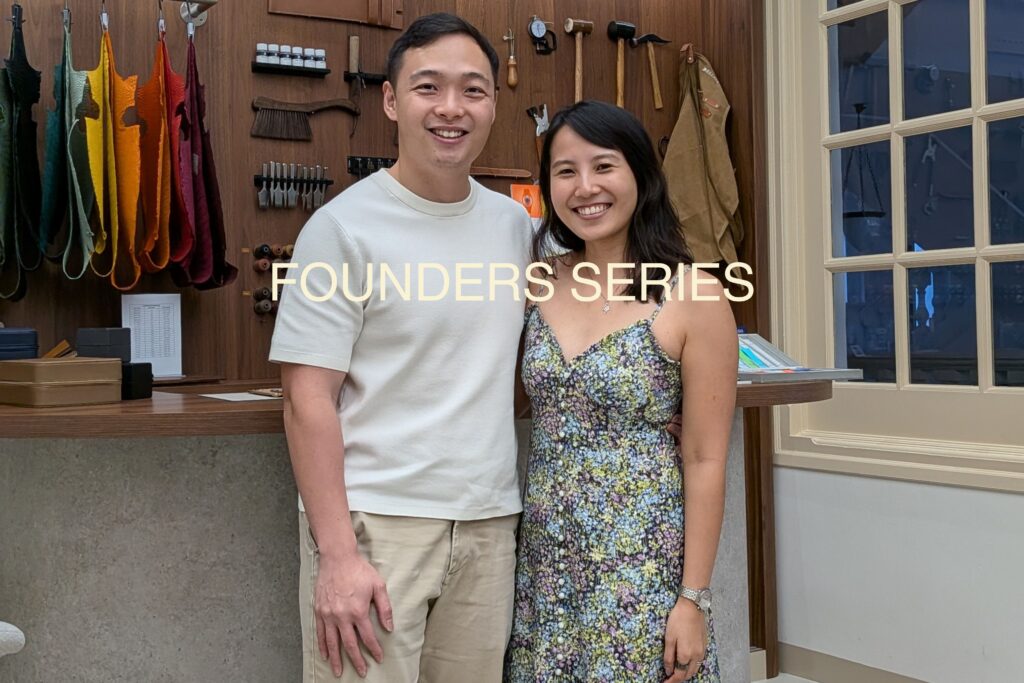
Delugs started in 2018 as straps made in a bedroom. Today Kenneth Kuan and Chia Pei Qi run boutiques at Raffles Hotel Arcade and in Hong Kong, and their Singapore space has hosted independents like Czapek, Dominique Renaud and Romain Gauthier. This year they’re going bigger with Golden Hour, a fair of around 20 brands that runs back to back in Hong Kong and Singapore, timed for the same week as Spring Sprang Sprung and IAMWATCH. We sat down with Ken and Pei Qi at the Raffles boutique to talk about why a strap brand is hosting a watch fair, putting a sub-$1,000 watch next to a six-figure one, and which booths will empty the most wallets.
Q1: From dressing watches to curating themDelugs started as straps made in a bedroom in 2018, and now it hosts Armin Strom,
MING and JN Shapiro at Raffles. When did you realise you wanted to be in the business of curating
watches, and not just dressing them?
DELUGS: Delugs started out as a hobby, making straps. Along the way, both of us got into watches quite deeply, and that has always been the DNA of the brand. Straps are the product we sell, but the base passion is watches. A lot of our customers are enthusiasts. They aren’t just people who buy Rolex, Omega or Cartier. Many love independent brands and microbrands, and that’s where the excitement and passion comes in.
We’ve always travelled for fairs overseas, and you always feel the excitement in the room. You see new models, you talk to people, you try on the watches. Here in Singapore, you only ever see it on Instagram, on YouTube, or reading Hodinkee. So we wanted to bring that experience here. We know many of these brands and have a personal connection with them, so it’s much easier for us to invite them over. We wanted to use what we’ve built over time and give back to the community.
Q2: Why a strap brand makes a good host: A strap brand is an unusual host for a watch fair. Does being a supplier to these brands,
rather than a retailer competing with them, make it easier to bring them into the room?
DELUGS: A fair wasn’t really the starting point. Since we opened the boutique, we’ve run events every single month: one-on-ones, mono-brand events, and mini fairs with four brands in a room. Over time, more and more people came to enjoy our space. So in the week when so many people fly into Singapore, it made sense to bring these brands together. A week before or a week after, you might miss the entire crowd.
It wasn’t coordinated as such. We talked to the different organisers and saw when they were running theirs. It was intentional that it’s the same weekend, and not just for us. The brands want to be here that weekend too, because their customers and potential customers will be here.
Q3: Golden Hour falls in the same week as SPRG and IAMWATCH. Was that timing
coordinated with the other organisers?
DELUGS: There’s value in all three formats: mono-brand events, smaller four-brand events, and the bigger fair. And 20 brands isn’t even a huge fair. Spring Sprang Sprung has nearly 80, so we’re still very small by that definition.
The earlier events taught us that people love coming out to see the watches. You may find some of these brands at retailers elsewhere, but people still want to talk to the people from the brand, try on the new models and hang out. The other big lesson is that a lot of people are prepared to buy. When we started, it was really a showcase. Over time, a lot of people asked the brands, “Do you have pieces I can buy immediately?”
So we’ve moved towards a model where the brand sells on the spot and the collector walks away with a watch they like. Because we talk to our enthusiast customers, we have a better sense of demand than a brand coming on its own. We tell them, “We’ve done this before, we can see people are interested in these watches.” If we think a watch is too big for our audience, we’ll share that too. It helps them ease into the Singapore and Southeast Asian market with the highest chance of success.
Q4: Your line-up runs from Baltic, at under $1,000, to six-figure independents. How do you put both in the same room and make each feel right?
DELUGS: A lot of the people who come to our events look across price brackets. They’re not saying, “I’m only looking at 10K and above,” or “only 1K and below.” That’s why we didn’t want only high-end brands or only microbrands under $1,000. Some brands were a bit surprised: why put such a high-end brand next to one selling for $1,000? But if you appreciate watches, you’ll appreciate them across the whole price spectrum.
To be clear, around five brands are display only. They aren’t exhibiting; we’re bringing in their watches, some from our own collection and some from other collectors, with the brands’ blessing. These are pieces that are super rare, maybe 25 in the world. A lot of private collectors buy and keep them, sometimes without even wearing them, and no one gets to see them. We have the ability to make that happen, so we wanted to give people the chance.
In the same room you’ll have Czapek and Felipe Pikullik at 20 to 30K and above, Atelier Wen with pieces at 30K and above, and Baltic, Dennison and Furlan Marri at a more accessible price point. The fair-style tables will be outside; the display-only and appointment-only brands, such as Simon Brette and Romain Gauthier, will be in the boutique. Because of the way we’ve curated the brands, it’ll be a curated audience too, and a respectful one. That’s what we want.
Q5: You’re running Hong Kong the week before Singapore, with a different line-up. How do
the two cities’ collectors differ in what they buy and how they buy it?
DELUGS: It’s a bit too early to tell how the collectors differ. This is the first Golden Hour fair, the first time back to back, and the first time in two countries. We did it mostly for the brands. There’s a high barrier for them to fly all the way to Singapore for three days: unfamiliar market, not being sure, a big investment. Make it a two-stop trip, Hong Kong then Singapore, and you cover two markets in one. We’d question it ourselves if we had to fly to the US for one smaller city. Singapore is a big watch market, but on its own it’s still not that impactful for them.
Hong Kong because our boutique is there and we have teams there. Both fairs sit close to our own locations. This one is right upstairs, and in Hong Kong a café space outside the boutique will become the event space. Among Asian cities, Singapore and Hong Kong are two of the biggest watch capitals, but our Hong Kong boutique has only been open about four months, so our read on that clientele is still limited. From what we know, it will be quite different.
Q6: You collect pieces like the Armin Strom Pure Resonance, and have collected one from
the watchmaker himself. How has your own collecting changed the way you choose who exhibits, if at
all?
DELUGS: We both prefer independent watches. Part of the joy isn’t just wearing the piece. It’s the story of how you came to it, how you acquired it, and what happens after. You could buy online and have it shipped, but above a certain price point you want to see it in person. Many of these brands have no big team behind them: the founder, the watchmaker, maybe one salesperson, and you see them at events around the world. That experience is worth much more than clicking on a website and receiving a box.
Naturally, if I own a piece and have an affinity with the watchmaker, those are the brands we try to invite, and often brands we’ve imported pieces from before. It’s a curated selection, though to be fair we don’t own watches from every brand exhibiting. For me, it’s really about hearing directly from the people behind the brand. When a retail team can’t tell you the story behind a piece, something feels lacking. When you talk to the brand directly, it hits different.
Q7: what is the gap Golden Hour fills
DELUGS: I’ll be very explicit. IAMWATCH, organised by The Hour Glass, is a huge and very successful event. But as a collector who has attended events around the world, my biggest pain point is that a lot of brands aren’t here that week, because they’re not represented by The Hour Glass.
Look at Dubai Watch Week. It works because almost every independent brand is there, since almost every independent in the UAE is represented by Seddiqi. The same can’t be said of Singapore. The market is fragmented, pretty much a duopoly when it comes to independents. When so many big collectors are flying in, not being able to see the brands you want is a big pain point. So we wanted to give a platform to brands that want to exhibit here but don’t have a space at IAMWATCH, or feel it isn’t the right venue for them.
Above all, most of these brands are online-only. They don’t even have a retailer, so you never get to see the pieces except on someone else’s wrist. That’s the whole reason we started Golden Hour.
Q8: You and Pei Qi built Delugs together. How do you split the work of running a fair like this,
and where do the two of you see things differently when choosing brands?
DELUGS: We depend on the entire team. We have about 20 staff in Singapore, and putting the fair together is three to five of us across two countries. Aiden runs it, and our marketing team supports on socials.
The hardest part is convincing the brands to come. They need to trust the trip will be worth it, and they’ll ask, “Is it just me? I don’t want to be the one sticking my neck out.” Then it’s convincing them to bring pieces to sell. Logistics aren’t easy: what to bring, how much, and getting it back if it doesn’t sell. Our team supports them on the back end.
Case in point: Kiwame Tokyo, a very hot brand in Japan. They sell in drops that go within minutes, so they don’t really have pieces. At first they said, “I’m just going to exhibit.” I told them, “You have to sell here.” We even ran a poll so they’d know they’d sell out if they brought anything at all. With another brand, we convinced them to move stock to the show, because if fans come and can only look, when they can’t even buy online, they’ll be disappointed. So: convince brands to come, convince them to bring stock, make sure people come. After that, we have to deliver.
Q9: Which booth will empty the most wallets?
DELUGS: Kuoe, the Japanese brand. They have a good fan base in Singapore and will definitely empty some pockets.: I think Kuoe, the Japanese brand, K-U-O-E. They seem to have a good fan base in Singapore.
They’ll definitely empty some pockets.Dennison. The stone dial is at a very affordable price point. I’ve already bought one. You see it and go, “Wow, it’s beautiful.” The size is good and it appeals to both men and women, so couples can buy a pair.
ALTO. The price point is significantly higher, around 15,000. I thought their first model was way too big, but they’ve just launched a smaller one. The case is very angular and the crystal is faceted, with a nice movement and an integrated bracelet. Brand awareness isn’t as strong yet, but once you see one in person and compare the options, it’s a strong proposition.
Anoma sells well, though they’re not bringing much, and Furlan Marri sells too. Really, anyone who brings stock will do well.: I think Dennison, the GPHG winner. The stone dial is at a very affordable price point. I’ve already
bought one. A lot of people will surely be interested. If people knew the price point, they’d be drawn in,
because you see it and go, “Wow, it’s beautiful.” The stone dial is so nice and the size is good. It’s a
brand that appeals to both men and women, so couples can buy a pair.
It’s a bit tricky, because there are so many brands, but not all of them are selling pieces. Let me check
who’s bringing stock. I’d say anyone who brings stock with them will do well.
Q10: What is your perspective of bringing more women into collecting
DELUGS: Yes, it’s a big goal and a challenging one, and something we want to focus on more next year. There aren’t that many serious women collectors yet, and the space is built very much for men in its conversations and storytelling. We talk a lot about technical specs, but for many women it’s more emotional; a lot of it is the story.
The fair is a good entry point to experience many brands at once. Beyond that, anyone who collects watches knows Delugs, but most people who don’t collect don’t know us, even our own friends. The bigger intent is to reach that wider audience, men and women, and naturally more women will come into the circle.
Q11: Independent high horology is getting a lot of attention and higher prices. What worries
you about where the market is going, and what role can a fair like this play in keeping it grounded?
DELUGS: Independent watches have already become art pieces, wearable art. But fairs like these humanise the people behind the brands. Take Kari Voutilainen. His watches have fetched over a million dollars at auction, and people think of watchmakers like him as gods. But they’re regular guys who make really good stuff and have dedicated their lives to it. Anyone can have a conversation with them.
At our first fair, in Dubai in 2023, we walked around going, “Look, that’s so-and-so.” In New York, Kari Voutilainen, whose waitlist is over ten years long and closed, was manning his own booth, sitting there talking about his watches. Standing there the entire day isn’t easy, and it’s very respectable. I hope people stay humble like that.
Quick-fire
The piece at Golden Hour you’d take home if price weren’t a factor?
DELUGS: Stéphane Pierre. For sure.
Best strap pairing you’ve done for a high-end watch?
DELUGS: It has to be the Royal Pop, though it’s a case pairing, not just a strap. It was our first development with a case. We were one of the first to announce one, and while we weren’t first to launch, we were very fast, because we did our own quality control and changed the mould quite a bit so it fits better. People still come down for the Royal Pop cases.
What’s on your wrists today?
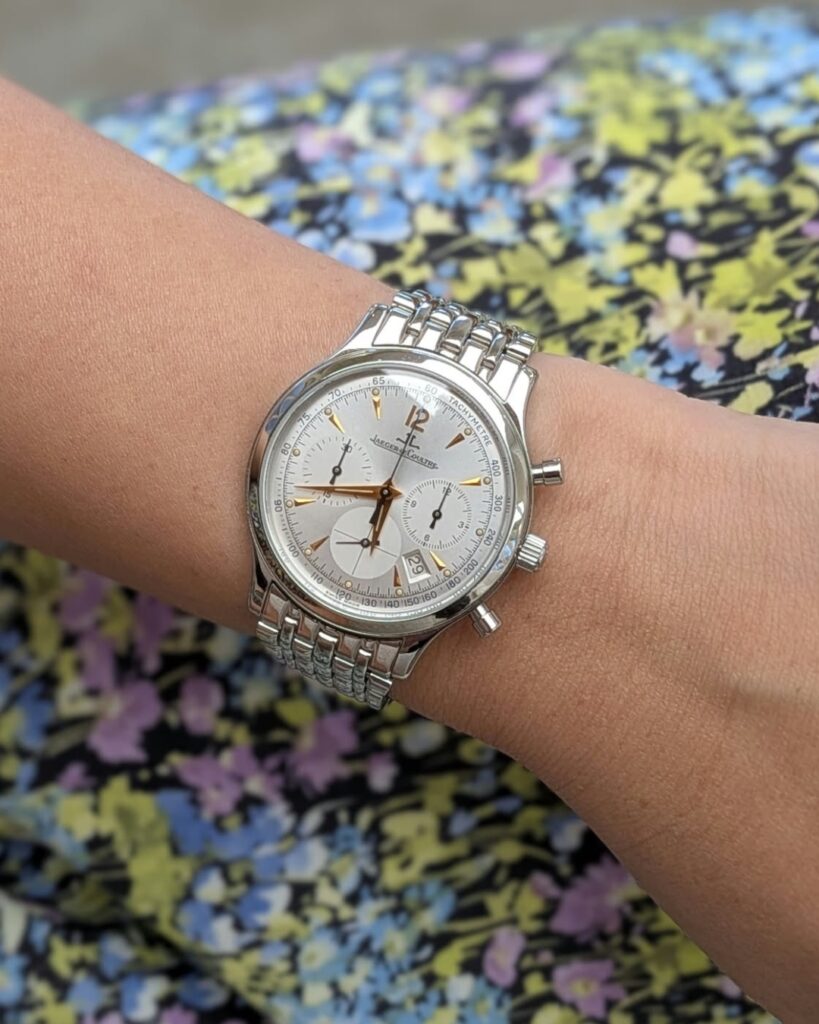
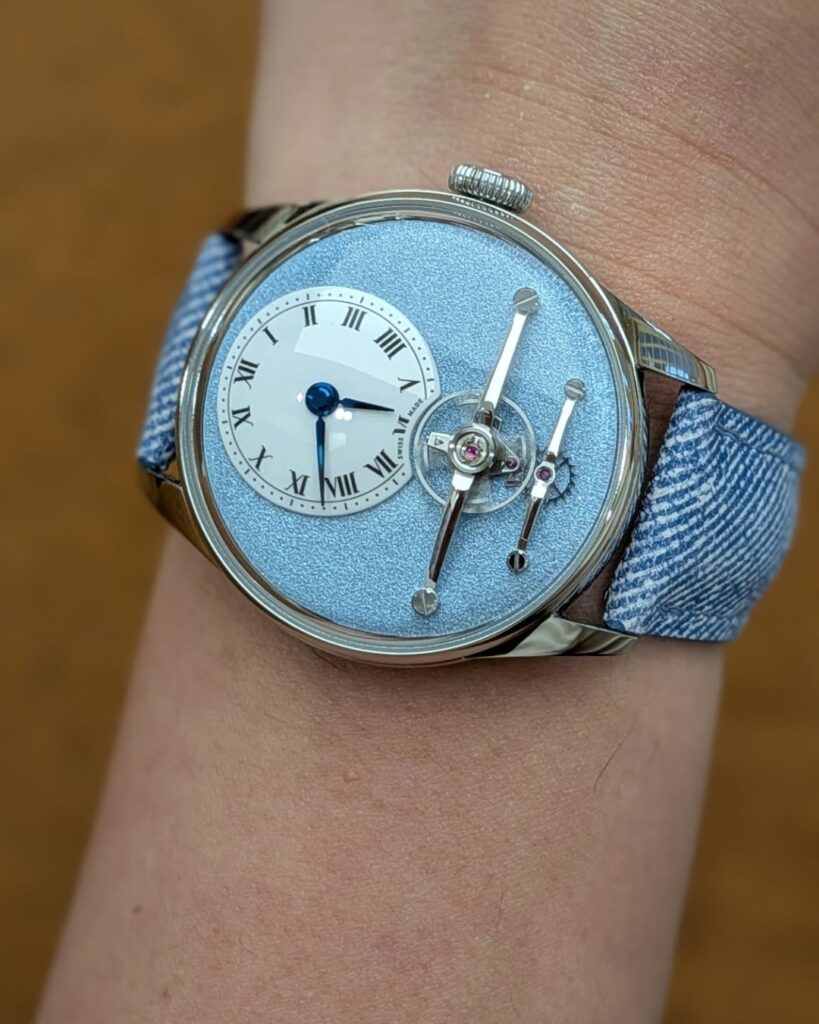
DELUGS: A vintage Jaeger-LeCoultre Heritage Chronograph on its steel bracelet, and a Greubel Forsey Balancier with that frosted blue dial, on one of our denim straps.
Fun fact: Before Delugs, Ken and Pei Qi both worked in the army.