Watches are a business of people, not objects.
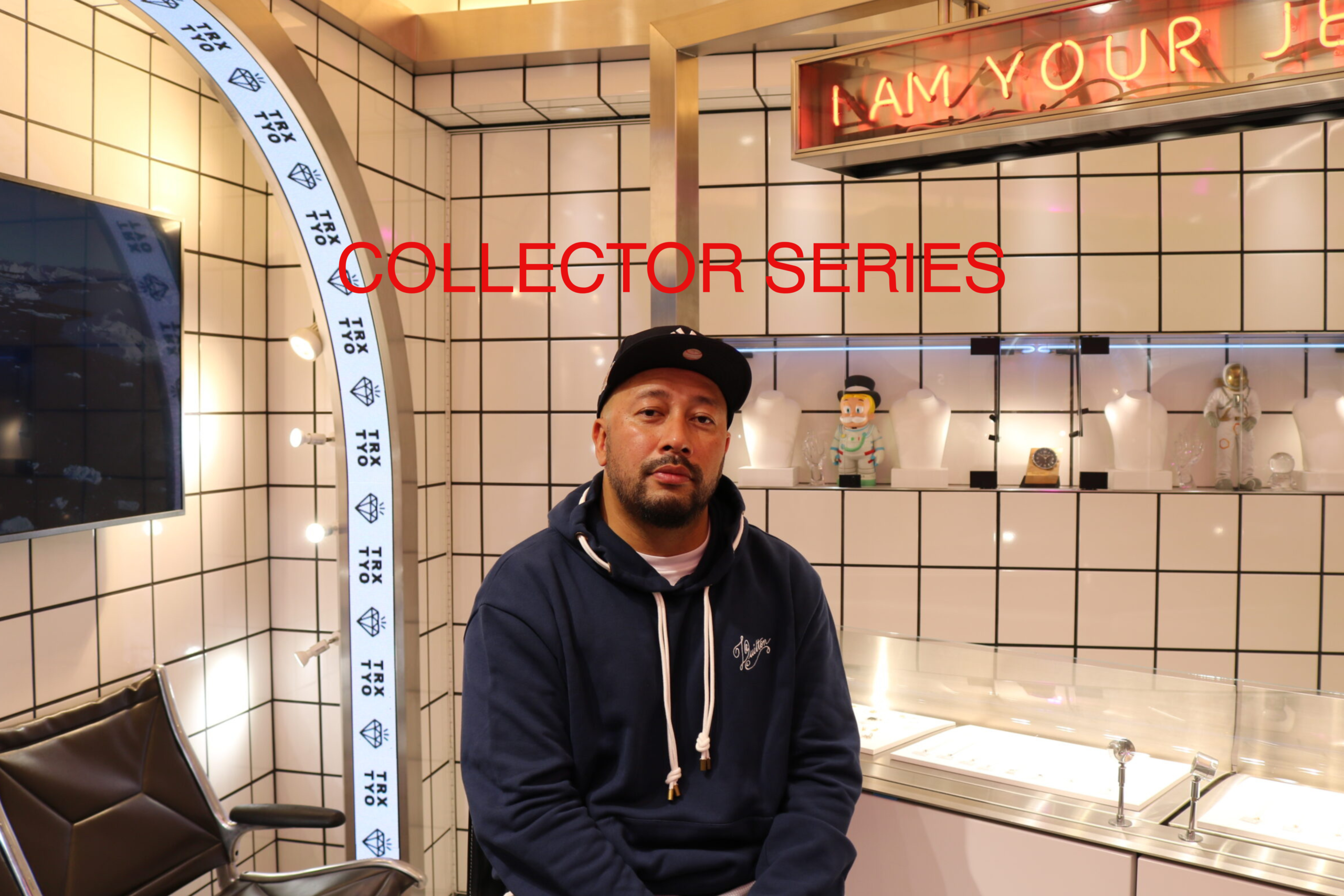
Born in Baghdad and raised across Saudi Arabia, Malaysia, Sapporo and LA, Mike Kawaguchi now runs TRAX TOKYO in Ginza — a store that deals in the highest end of horology but feels like a street shop, with roots in the LA hip-hop and American jewelry scene he opened his first store in more than twenty years ago. As TRAX TOKYO partners with SGWatchHub, he talks about Tokyo’s unforgiving eye for condition, Singapore’s heat for watch conversation, the aftermarket, scarcity, and why the relationship after the sale matters more than the sale itself.
Q1: Why Singapore, and why now?
My whole life has been a story of moving from city to city. I was born in Baghdad, then Saudi Arabia, Malaysia, Sapporo, LA, and finally Tokyo. The TRAX name works the same way. I originally fell in love with TRAX NYC’s pieces and was selling them in serious volume in Japan — and one day the owner said, “let’s do this together.” The brand never grew through contracts or strategy decks. It grew through people. Singapore is where Asia’s people, money, and information all converge, and the level of watch conversation there is the real thing. Why now? Because the right partner showed up. That’s the whole answer. I’m not the type who thinks first and moves later — I move first and figure it out on the way (laughs).
Q2: Tokyo vs. Singapore: collector temperament
Tokyo customers are the strictest in the world on condition. They’ll look at a piece through a loupe for twenty minutes in complete silence, and then either buy it or walk out without a word. They will find the scratch you didn’t mention — so you mention everything first. That’s how business works in Ginza. Singapore is much more open. Over dinner, online, everywhere — people talk watches constantly. There’s speed and heat in that market. We deal with customers from all over the world, so I see this contrast every day. But here’s the interesting part: when the Tokyo “eye” and the Singapore “heat” both say a piece is good, it’s genuinely good. Different filters, same destination.
Q3: Why the zero-commission, community-first model resonated
Let me be honest about what we do: we’re the secondary market. No point dressing it up. And in this world, the only thing that survives long-term is trust. My own relationship with TRAX NYC didn’t start with a contract — I fell in love with the product, sold a lot of it, and they came to me. That’s the origin of this store. So SGWatchHub’s idea — don’t skim a fee off every transaction, invest in growing the community itself — made complete sense to me. Most marketplaces optimize for the one moment money changes hands. Everything before and after is someone else’s problem. Real business works the other way around: the relationship after the sale is what brings you the next sale. The flow of people matters more than the flow of money. In the end, that’s what wins.
Q4: Luxury watches × hip-hop: tension or synthesis?
Honestly? There’s nothing for me to defend here. I love Black music — that’s why I opened my first shop in LA more than twenty years ago. A place with a DJ booth, sports on the screens, American jewelry and clothes on the racks. My store in Ginza today is a direct extension of that. That’s the whole story. People who call it a “tension” simply don’t know the order of events. Hip-hop made watches culture first; the industry came running after. Now the maisons themselves are collaborating with rappers. And yes — my shop deals in the highest end of horology but feels like a street shop. That’s deliberate. I don’t want a store that filters customers by formality. If what’s in the case is real, the store can be as relaxed as it wants.
Q5: The line between timepiece and icon
Let me answer with real numbers. Right now, a Daytona retails at roughly ¥2.5 million. On the secondary market, it trades between ¥5 and 6 million. More than double. Who creates that gap? Not the manufacture. Culture and the market do. Paul Newman wore it, and collectors told that story for decades. That accumulation is what made the Daytona an icon. A maison can only build the watch — the outside world decides whether it becomes an icon. And people like us in the secondary market play the role of supporting that price from underneath. So does the line matter? In the world of prices, yes. To the person wearing it, no. The best moment in this business is when a customer’s face changes from “is this the icon?” to “this is my watch.” That’s everything.
Q6: My honest position on the aftermarket (AET Remould, Artisans de Genève)
I started in American jewelry, so custom culture isn’t an edge case for me — it’s the center of the culture I come from. In LA, a car or a chain doesn’t really begin until you’ve made it yours. The moment you buy a watch, it’s yours. I understand the purists too. Modifying a historically important reference — yes, that’s a waste, and I’d say so. But most watches aren’t museum pieces. They’re tools for someone’s life. As a dealer, there’s exactly one thing I won’t compromise on: a modified piece must be sold as a modified piece, stated clearly, every time. The people who hide it are the ones who poison this industry. What the aftermarket really proves is simple — nobody wants to wear the same watch as ten thousand other people. That desire is far older than the watch industry.
Q7: What scarcity has done to collecting culture
If you ask whether it’s healthy — honestly, parts of it aren’t. Watches have become positions instead of possessions. People buying steel sports models with zero intention of wearing them, waitlists behaving like financial instruments — everyone inside this industry knows it. But here’s the other truth: the hunt itself is part of the love. A piece you waited years for carries a weight that an instantly available piece never will. Scarcity built this entire passion economy — that’s real too. My view is simple. Market swings are a given. Overheating always corrects — and what remains after the correction is the culture. Our job, in any market, is to keep moving pieces toward the people who will actually wear them. Do that consistently, and you never go wrong.
Q8: How Tokyo shapes the way TRAX sees and sells watches
Japan’s secondary market grades condition with an honesty that shocks people from outside. That’s exactly why Japan-sourced pieces command a premium worldwide. Running a store in Ginza means carrying that standard on your back. Our customers have the sharpest eyes in the world, so we have no choice but to disclose everything — and that, in turn, is why overseas customers come to us. They fly to Tokyo to buy because, in their words, Japanese stores don’t lie. And remember, this is the country of Grand Seiko. We’re selling Swiss watches in a place where the entire nation understands what finishing means. It keeps you sharp. When TRAX calls a piece clean, that word carries the weight of Tokyo.
Q9: What brands misread about the Asian collector
Two things. First, they treat Asia as one market. I was born in Baghdad and grew up across Saudi Arabia, Malaysia, Japan, and the US, so I’ll say it plainly: Tokyo, Singapore, Hong Kong, and Taipei each have completely different ways of buying and completely different relationships with watches. An ad made in Geneva and translated four times lands nowhere. Second — the bigger one — they still assume Asian customers buy for status. Twenty years ago, maybe. But today’s Asian collectors are the most knowledgeable customer base on the planet. Movement architecture, production numbers, auction history — it’s all in their heads. I see it every day with the international customers who walk into our store. Talk down to that audience with lifestyle imagery alone, and the community sees through it instantly. And they don’t forget.
Q10: Message to the Singapore community
TRAX TOKYO is a Ginza store, but it’s built like a street shop — anyone can walk in comfortably. What’s in the cases, though, is all real: Richard Mille, Patek, all of it. And we deliver it to Singapore with Japanese grading standards attached. What I want to build with SGWatchHub isn’t a listing feed — it’s a bridge people actually cross. Because in the end, watches are a business of people, not objects. If any collector from Singapore finds themselves in Tokyo, come by the store. The door is always open. Come show your face first — everything starts from there.
Interview By: Mr Luxury. Largely in Mike Kawaguchi’s own words.