
Reading Time: 7 mins.
Something is shifting east of Geneva. Across Singapore, Hong Kong, and the wider Asia-Pacific, a generation of independent watchmakers is emerging — not imitating the Swiss tradition, but engaging with it on their own terms. We begin that conversation with a name you should know: LOTH.
Independent watchmaking has always had a geography problem. The story, as it is traditionally told, begins and ends in the Vallée de Joux — in the ateliers of men with names like Voutilainen, Journe, and Dufour. The assumption, rarely spoken aloud, was that this level of craft could only exist there. That the knowledge, the culture, and the sensibility required to make a truly considered mechanical watch was native to the Swiss Alps and nowhere else.
That assumption is quietly being dismantled. And nowhere more pointedly than in Singapore. We’re starting this series close to home. Tristan Ho is 28 years old, holds a Life Sciences degree from NUS, and works as a research assistant.
Singapore’s credentials as a watch market are not in question. The city-state ranks among the top ten watch markets in the world by volume, with a buyer base that skews knowledgeable, discerning, and disproportionately drawn to independent and artisanal pieces. Collectors here have long understood the difference between a movement signed by a manufacture and one signed by a single pair of hands. The appetite for quality independent watchmaking has existed in this market for years — what has been missing, until recently, is a local voice.
That is changing. Across Singapore, a wave of independent and micro-brand watchmakers has emerged over the last several years — some designing bespoke pieces for the local market, others developing cult followings internationally.
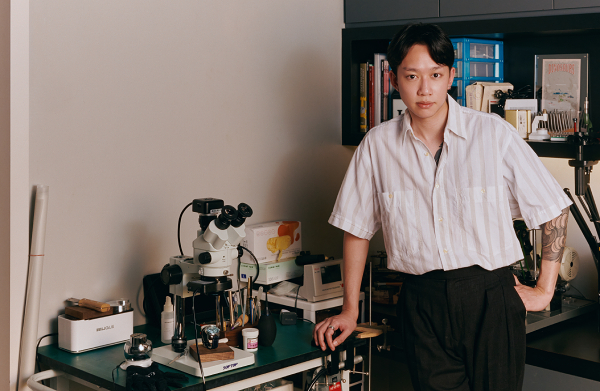
Tristan Ho is 28 years old, holds a Life Sciences degree from NUS, and works as a research assistant. He taught himself watchmaking through YouTube videos and correspondence with independent makers across the world. His workshop is a bench on the second-floor landing of his parents’ Tampines home. His debut collection consists of twelve pieces.
Eight of them sold before delivery was complete, to collectors in Singapore, Australia, and the United States.
Ho founded LOTH — an acronym for Lab of Tristan Ho — in August 2024. The catalyst, as he has described it, was not so much a love of watches as an encounter with the gap between what a watch could be and what the market was offering at any accessible price point. Unable to find what he was looking for, he built it. What began as modifying a Seiko NH35 evolved, over three years of self-directed study and relentless practice, into something altogether more considered.
"We are the sixth largest watch market in the world, but we don't really have anyone doing what I do — not really any artisanal, independent watchmakers. We have a lot of smart and skilled people, and we definitely have people who love watches. I think we have the potential to become the next big thing in Asia."
Tristan Ho, Founder, LOTH
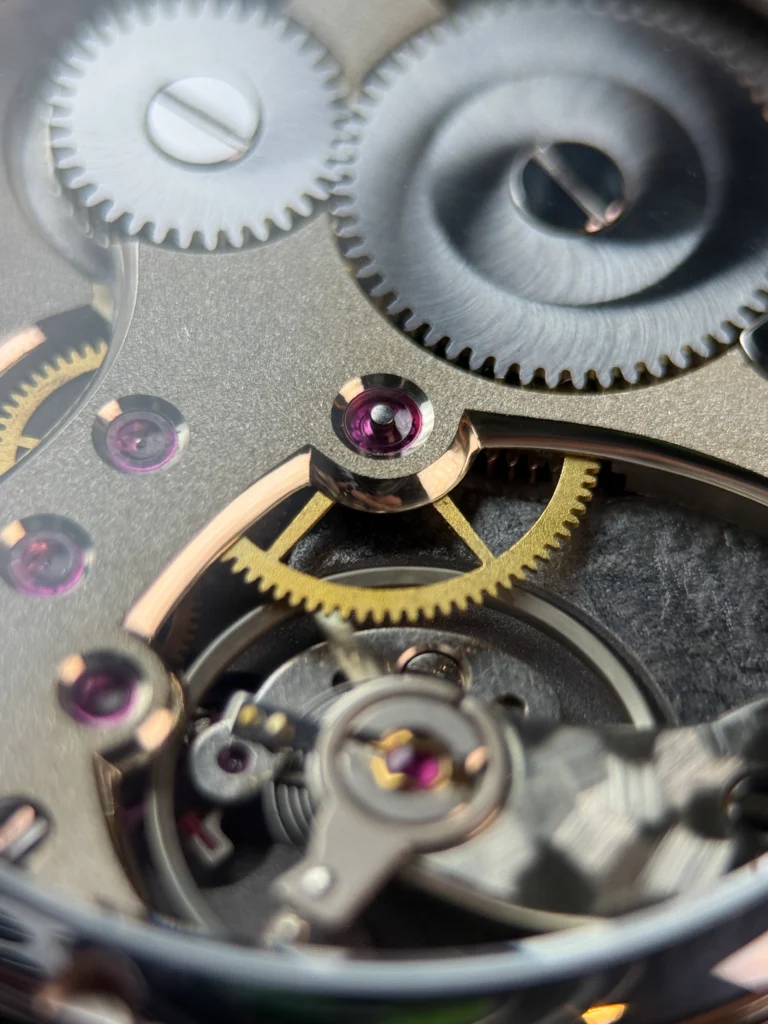
The LOTH Watch 1 is powered by the “First Calibre” — a vintage ETA/Unitas 6498 base rebuilt with custom-machined German silver bridges. The choice of material is deliberate and characterful: German silver is not silver at all, but a copper alloy containing nickel and zinc, valued in nineteenth-century watchmaking for its visual quality. Left unlacquered, it develops a patina over time — what Ho describes as a honeyed, ambrosia tone. No two pieces age in exactly the same way.
The dial is also German silver, worked by hand. Each piece features freehand chamfering and manual snailing — two finishing techniques that demand precision and patience in equal measure, and that leave their mark differently on every watch that passes through. The pearlescent mosaic pattern on the dial surface, encircled by a sunray-brushed stainless steel chapter ring, is not reproduced by machine. It is made, each time, by a single person at a bench in Tampines.
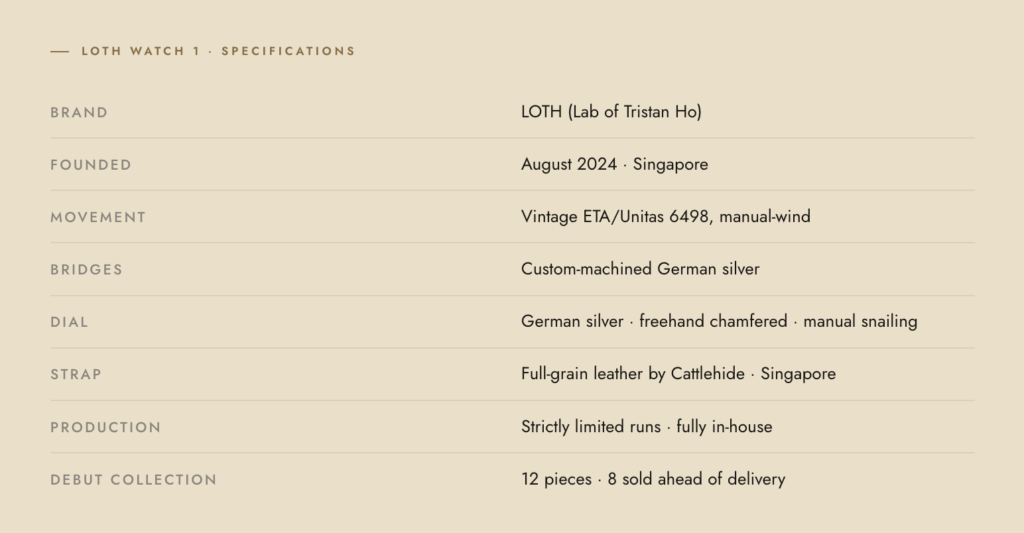
The accompanying straps are made by Cattlehide, a Singaporean leather artisan. The whole piece — movement, dial, bridges, strap — is a product of Singapore. That is not incidental. It is the point.
LOTH’s own website describes its watches as “a quiet protest, a revival of the lost art of traditional, artisanal watchmaking.” The phrase is worth sitting with. Independent watchmaking, at its best, is always a form of resistance — against the consolidation of the manufacture system, against movements valued purely for their complications, against the idea that the worth of a watch is determined by the brand on its dial rather than the hands that made it.
What makes Ho’s version of this protest notable is the context from which it emerges. He is self-taught, working without institutional backing, operating not from a Swiss valley but from a home workshop in one of Southeast Asia’s most densely urban environments. The skills he has acquired — anglage, snailing, the patience to spend hours on a single bridge — were not inherited or academically conferred. They were pursued, deliberately, out of a conviction that they mattered.
At the SG60 watch showcase hosted by Delugs in August 2025, Ho demonstrated his mastery of anglage in person — guiding loupes over the perfectly polished chamfers of the LOTH Watch 1 for anyone who wanted to look closely. It was, by all accounts, an unusual kind of demonstration. Not a pitch, not a presentation.
Just a craftsman showing his work.
LOTH is a singular case, but it is not an isolated one. The conditions that produced it — a highly literate watch market, accessible online education, a global community of independent makers willing to share knowledge across borders, and a generation of collectors who have grown tired of waiting lists and inflated grey market premiums — are present across Asia.
In Singapore alone, the watch brand landscape has expanded to encompass more than eighty active labels. The overwhelming majority sit in the microbrand tier, deploying Swiss or Japanese movements in original case designs. But the category is broadening. Brands like Atelier Wen are building reputations on distinctive cultural identity and dial craft. The appetite for something more artisanal — something closer to the European independent tradition — is not going away.
What LOTH represents is the beginning of that next step: an Asian watchmaker not deploying an off-the-shelf movement in an interesting case, but engaging with the internal architecture of the watch itself. The bridges. The finishing. The parts that most buyers will never see without a loupe. Ho’s stated ambition is to develop Singapore’s first in-house movement. Given everything he has taught himself in three years, it would be unwise to dismiss that as aspiration.
Singapore’s position in the global watch trade is well established. The city is a hub for grey market activity, for authorised retail, for the secondary market. What it has not been, historically, is a place of manufacture. That is beginning to shift — not at scale, but in spirit.
LOTH Watch 1 collectors span Singapore, Australia, and the United States. The brand has been covered by Monochrome, The Peak, Harper’s Bazaar Singapore, and Esquire Singapore — publications whose watch coverage extends well beyond the local market. The interest is real, and it is coming from serious quarters.
For Singapore’s watch community, LOTH is a source of genuine pride. It demonstrates that the knowledge, the discipline, and the sensibility required to make a hand-finished mechanical watch of real quality can exist here. That the geography of independent watchmaking is not fixed. That Asia is not a consumer of the Swiss tradition — it is becoming a contributor to it.
At Maison Indépendante, this is precisely the story we exist to tell. Independent watchmaking is not defined by the country of origin marked on a caseback. It is defined by the choices a maker makes — to work by hand when machines would be faster, to use difficult materials when easier ones exist, to produce fewer pieces when demand would support more. By every one of those measures, LOTH belongs in the conversation.
We will be following Tristan Ho’s work closely. We suspect you will want to as well.
Written By: Mr Luxury
This site uses cookies to offer you a
better browsing experience.